

Keeping rubbish storage inside cabinetry can reduce visible clutter and give the kitchen a more organised appearance. However, an integrated bin needs to do more than fit behind a door. Capacity, access and cabinet dimensions all affect how convenient it will be during daily use.
Before selecting a wesco bin, homeowners should look closely at where the system will be installed and how much waste the household normally produces.
Begin With the Cabinet
Integrated waste systems are limited by internal cabinetry rather than external door dimensions.
Measure the actual usable space and check for hinges, drawers, plumbing or supports that reduce clearance.
Important measurements include:
-
Internal width
-
Cabinet depth
-
Available height
-
Door-opening clearance
-
Position of fixed hardware
-
Space required for runners
-
Nearby plumbing where relevant
These dimensions create a reliable starting point for comparing products.
Decide How Much Capacity You Need
A household of two may have very different waste habits from a larger family.
Your current bin provides useful evidence. Note how large it is and how often it needs emptying.
A wesco dustbin that is significantly smaller than your existing container may fit neatly but require more frequent liner changes.
Wesco dustbin capacity should therefore be evaluated against actual household behaviour rather than choosing the largest or smallest option automatically.
Consider Single Versus Multiple Containers
Waste separation is now part of many kitchen routines.
A multi-container configuration can keep different waste streams together inside one cabinet footprint. This may be more convenient than having separate bins spread around the room.
Capacity Does Not Need to Be Equal
Different waste types accumulate at different rates.
Observe before deciding
Track general rubbish and recycling for several days. If one stream regularly fills much faster, choose a configuration that reflects that difference where suitable options are available.
Think About Pull-Out Accessibility
An integrated wesco waste bin should be easy to reach without awkward bending into a deep cabinet.
Pull-out mechanisms bring the container towards the user, which can simplify both disposal and liner replacement.
Wesco waste bin systems should have enough clearance to extend freely without striking adjacent doors, handles or cabinet structures.
Position the Bin Near the Work Area
Bin location can affect how efficiently the kitchen functions.
Think about where packaging is opened, vegetables are prepared and surfaces are cleaned. Placing waste storage near these areas can reduce repeated walking during meal preparation.
A wesco bin located far from the main work zone may remain neatly concealed but still be less convenient than a better-positioned alternative.
Check Removal Clearance
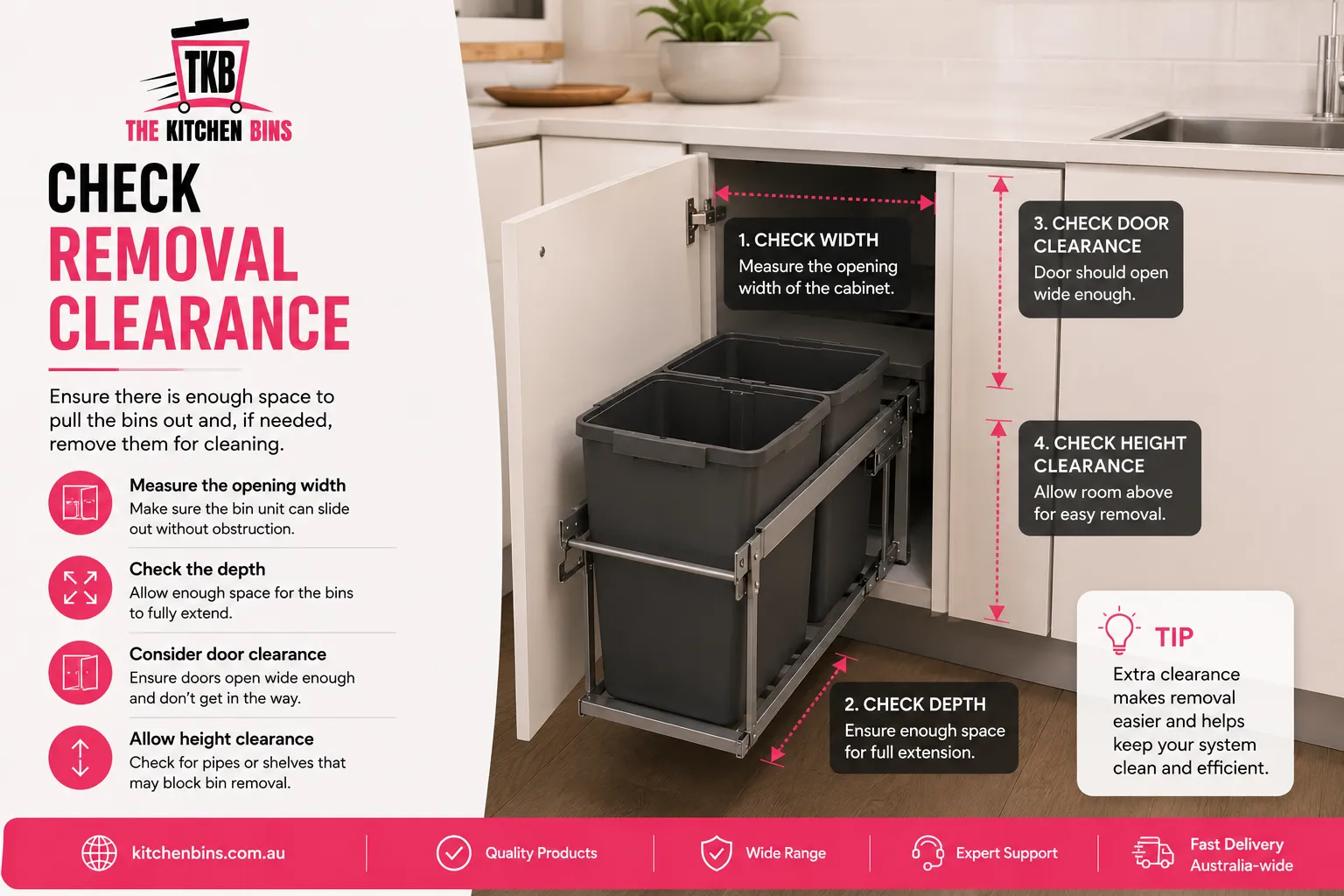
Integrated buckets need to come out occasionally for cleaning.
A container can fit perfectly within the cabinet yet still be difficult to lift out if there is not enough space above it.
Measure for Maintenance, Not Just Installation
Day-one fit is only part of usability.
Test how the bucket will be removed
Consider the angle required to lift it from the frame. Nearby drawers, benchtops or plumbing may affect this movement.
Make Cleaning Straightforward
Rubbish containers should be easy to wipe and periodically wash.
Keep the surrounding cabinet floor accessible and avoid filling the mechanism area with loose household products.
A wesco dustbin installation may remain easier to maintain if liners, cloths and cleaning supplies are stored in a separate compact organiser nearby rather than around the moving frame.
Avoid Buying by Capacity Alone
Two bins with similar litre capacities can have different physical shapes.
One may be taller and narrower, while another uses more depth. Integrated products must match the available cabinet geometry.
For this reason, compare complete dimensions for any wesco waste bin rather than assuming a familiar capacity will automatically fit.
Why Choose Us
Kitchen Bins provides a selection of cabinet-based waste-storage products, including options for shoppers interested in Wesco systems. Homeowners can compare products using dimensions, configuration and available kitchen space as practical selection criteria.
This helps keep the decision focused on everyday usability rather than appearance alone.
About Us
Kitchen Bins specialises in waste solutions intended to work with kitchen cabinetry. The aim is to help households move rubbish storage into practical, dedicated areas while making better use of available cabinet space.
For customers exploring a wesco bin, accurate measuring and an understanding of household waste habits provide the strongest basis for choosing a suitable configuration.
Conclusion
A well-selected Wesco waste system can help keep rubbish concealed, organise waste separation and free visible kitchen floor space.
The most successful choice begins with measurements. Combine those dimensions with realistic capacity requirements, accessible placement and cleaning considerations, and the integrated bin is far more likely to remain convenient long after installation.