
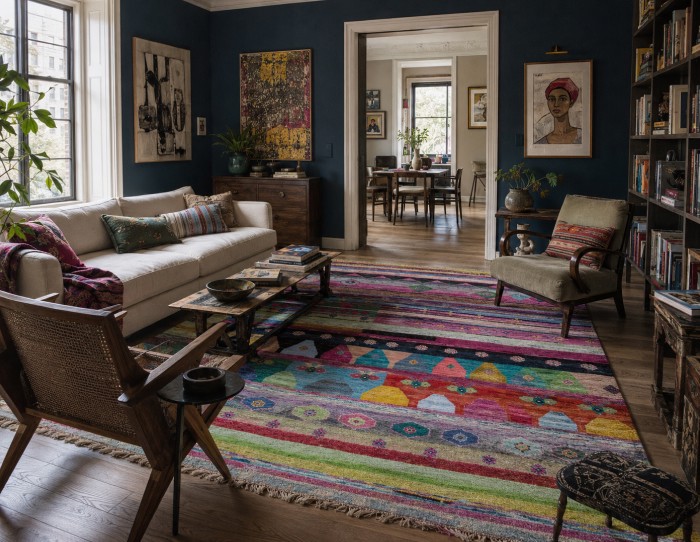
An erased rug works best when it complements your room’s color palette, fits the space proportionally, and suits your lifestyle. Choose a material that handles your foot traffic, pick a design that balances (rather than competes with) your existing décor, and buy from a trusted handcrafted source for lasting quality.
Erased rugs have a quiet confidence about them. They look like they’ve always belonged—worn in, layered, and lived with. That faded, washed-out aesthetic gives them a softness that most rugs simply can’t replicate. And because they sit somewhere between traditional and contemporary, they work in almost any room.
But “works in almost any room” doesn’t mean any erased rug will work in your room. The wrong size, the wrong tone, or the wrong pattern can throw off an entire space. This guide walks you through exactly how to choose an erased rug that fits your interior—room by room, decision by decision.
What Are Erased Rugs?
Erased rugs, sometimes called distressed or abrash rugs, get their characteristic look through a deliberate washing or chemical treatment process. This process softens the dyes and slightly blurs the pattern, giving the rug a vintage, time-worn feel.
The style draws from Persian and Oriental rug traditions, where natural color variations (abrash) were a natural part of hand-dyeing wool. Modern erased rugs recreate that effect intentionally, combining rich patterning with a muted, faded finish.
The result? A rug that feels antique but doesn’t look stuffy. Versatile enough for a modern apartment, characterful enough for a traditional home.
How to Choose an Erased Rug: Key Factors to Consider
Does the rug work with your existing color palette?
Start here. Erased rugs typically feature muted, dusty tones—faded reds, washed blues, soft greens, warm ivories. These colors blend well with both neutral and saturated interiors.
Pull out the dominant colors in your room: wall paint, sofa, curtains, accent pieces. Then look for an erased rug that picks up one or two of those tones without matching them too precisely. A rug that’s slightly different from the rest of the room creates visual depth. One that matches perfectly can feel flat.
If your room leans neutral (whites, grays, beiges), an erased rug with a pop of dusty terracotta or faded navy adds warmth without overwhelming the space. If your room already has strong color, go for an erased rug with a softer, more washed-out palette to balance things out.
Is the size right for your space?
Rug sizing is one of the most common mistakes people make—and one of the easiest to avoid.
A general rule: in a living room, your rug should be large enough for the front legs of all major furniture to sit on it. Going smaller makes the rug look like an afterthought. In a dining room, the rug should extend at least 60cm beyond the table on all sides so chairs stay on the rug when pulled out.
Measure your space before you shop. Sketch a quick floor plan and mark where you want the rug to sit. Common sizes—5×8, 6×9, 8×10—work for most standard rooms, but don’t force a size that doesn’t fit your layout.
What material suits your lifestyle?
Erased rugs come in several materials, each with different feels and durability levels:
-
Wool: Durable, naturally stain-resistant, and soft underfoot. A solid choice for living rooms and bedrooms with moderate foot traffic.
-
Silk: Lustrous and fine, with a beautiful sheen. Better suited for low-traffic areas like a formal sitting room or bedroom.
-
Wool-silk blends: Offer the best of both—softness, durability, and a subtle sheen. Great for spaces where you want both comfort and visual richness.
-
Synthetic or cotton: More affordable, easier to clean. Better for high-traffic zones like hallways or children’s rooms.
Think honestly about how the space gets used. A busy family living room needs something hardwearing. A bedroom or study can handle something more delicate.
How does the pattern affect the room’s feel?
Erased rugs already carry pattern—florals, medallions, geometric borders—but the washing process softens it so the design doesn’t dominate. That’s part of their appeal.
In a room with a lot of pattern (patterned cushions, textured walls, printed curtains), choose an erased rug with a subtler, more washed-out design. In a minimal room with clean lines and solid colors, a bolder erased pattern adds visual interest without looking busy.
Pay attention to scale too. Large medallion patterns suit larger rooms; smaller, all-over designs work better in tighter spaces.
How Erased Rugs Work in Different Interior Styles
Modern interiors
In modern spaces—think clean lines, minimal furniture, neutral walls—an erased rug introduces warmth and texture without disrupting the simplicity. Go for one with a faded geometric or abstract pattern. Stick to cooler tones (faded indigo, grey-green, soft ivory) to stay in line with a contemporary palette.
Traditional settings
Erased rugs feel right at home in traditional interiors. The distressed finish softens what might otherwise feel too formal, making ornate patterns feel more relaxed and approachable. Warm tones—faded reds, dusty golds, aged burgundy—complement wooden furniture and classic architectural details.
Bohemian and eclectic spaces
Erased rugs thrive in layered, eclectic interiors. Their vintage quality fits naturally alongside mixed furniture styles, global textiles, and collected décor. In bohemian spaces, you can be bolder with color and pattern—the worn finish keeps it all from feeling too precious.
Where to Buy Quality Erased Rugs Online in India
Shopping for rugs in person has its limits—selection is narrow, prices are often inflated, and the experience rarely gives you the full picture of what’s available.
When you buy rugs online in India, you access a far wider range of styles, sizes, and price points. More importantly, you can shop directly from makers and ateliers who specialize in handmade pieces—which matters a great deal with erased rugs, where craftsmanship directly affects quality.
Handcrafted Rugs in India carry something mass-produced rugs simply can’t: the mark of skilled hands, natural materials, and time. India—particularly the Bhadohi region of Uttar Pradesh—is one of the world’s most respected centers of hand-knotted carpet weaving. Rugs made here benefit from generations of knowledge passed down through artisan communities.
Why The Ambiente Is Worth Considering
The Ambiente is a design-led rug atelier rooted in Bhadohi, with a flagship showroom in Sultanpur, New Delhi. The brand is backed by over 30 years of manufacturing experience through its parent company, Bhadohi Carpets, and has served more than 5,000 clients across India and internationally.
Founded by Avani Khandelwal—an MBA graduate from MDI Gurgaon with a background in marketing and consumer behavior—The Ambiente was built to make handwoven rugs accessible to a wider audience without cutting corners on quality.
Their collection includes handcrafted silk and wool rugs, and their production network involves over 4,000 women weavers, many from rural communities in Uttar Pradesh. Every rug that leaves their atelier reflects both traditional technique and considered modern design.
If you’re looking to buy rugs online in India and want something genuinely handcrafted, The Ambiente is a strong place to start. Their ready-to-ship collection spans a range of styles—including erased designs—and they also offer bespoke options for custom sizing and colorways.
Find the Right Erased Rug for Your Home
Here’s a quick recap of what matters most:
-
Match the tone, not the color exactly. Pick up one or two hues from your existing room without matching precisely.
-
Size up, not down. A larger rug almost always looks better than one that’s too small.
-
Choose material based on how you live. Wool for durability, silk for luxury, blends for balance.
-
Let the pattern support the room. Busier rooms need quieter patterns; minimal rooms can handle bolder ones.
-
Buy from makers who know their craft. Handcrafted Rugs in India—especially from heritage regions like Bhadohi—offer quality that holds up over time.
The right erased rug doesn’t just fill floor space. It anchors the room, adds warmth, and quietly pulls everything together. Take your time, trust your instincts, and choose something built to last.
Frequently Asked Questions About Erased Rugs
What makes an erased rug different from a regular rug?
An erased rug goes through a deliberate washing or chemical treatment after weaving, which fades the dyes and softens the pattern. This gives the rug a vintage, worn-in appearance. Regular rugs retain their full, vibrant color and sharp pattern definition.
Are erased rugs suitable for high-traffic areas?
It depends on the material. Wool erased rugs handle moderate-to-high traffic well. Silk versions are better suited for low-traffic rooms like bedrooms or formal sitting areas. For high-traffic zones like hallways or family rooms, a wool or wool-blend erased rug is the more practical choice.
How do I maintain and clean an erased rug?
Vacuum regularly without the beater bar to avoid damaging the fibers. For spills, blot immediately—never rub. For deep cleaning, professional rug cleaning is recommended, especially for wool and silk pieces. Avoid steam cleaning or harsh chemicals, which can further fade or damage the fibers.
Is it safe to buy rugs online in India without seeing them in person?
Yes, provided you shop from reputable sellers who offer detailed product descriptions, high-resolution images, accurate sizing information, and clear return policies. Many quality Indian rug brands—including The Ambiente—also offer bespoke consultations to help you choose the right piece remotely.
What room sizes work best with erased rugs?
Erased rugs work in any room size, but the rug itself must be proportional to the space. For living rooms, an 8×10 or larger is typically recommended. For bedrooms, a 5×8 or 6×9 placed under the lower two-thirds of the bed works well. Always measure first and avoid rugs that are too small for the furniture arrangement.
Are handcrafted rugs from India worth the investment?
Handcrafted Rugs in India—particularly from weaving centers like Bhadohi—are built using traditional techniques with natural materials. They’re significantly more durable, more detailed, and more unique than machine-made alternatives. With proper care, a quality hand-knotted rug can last decades, making it a worthwhile long-term investment.