
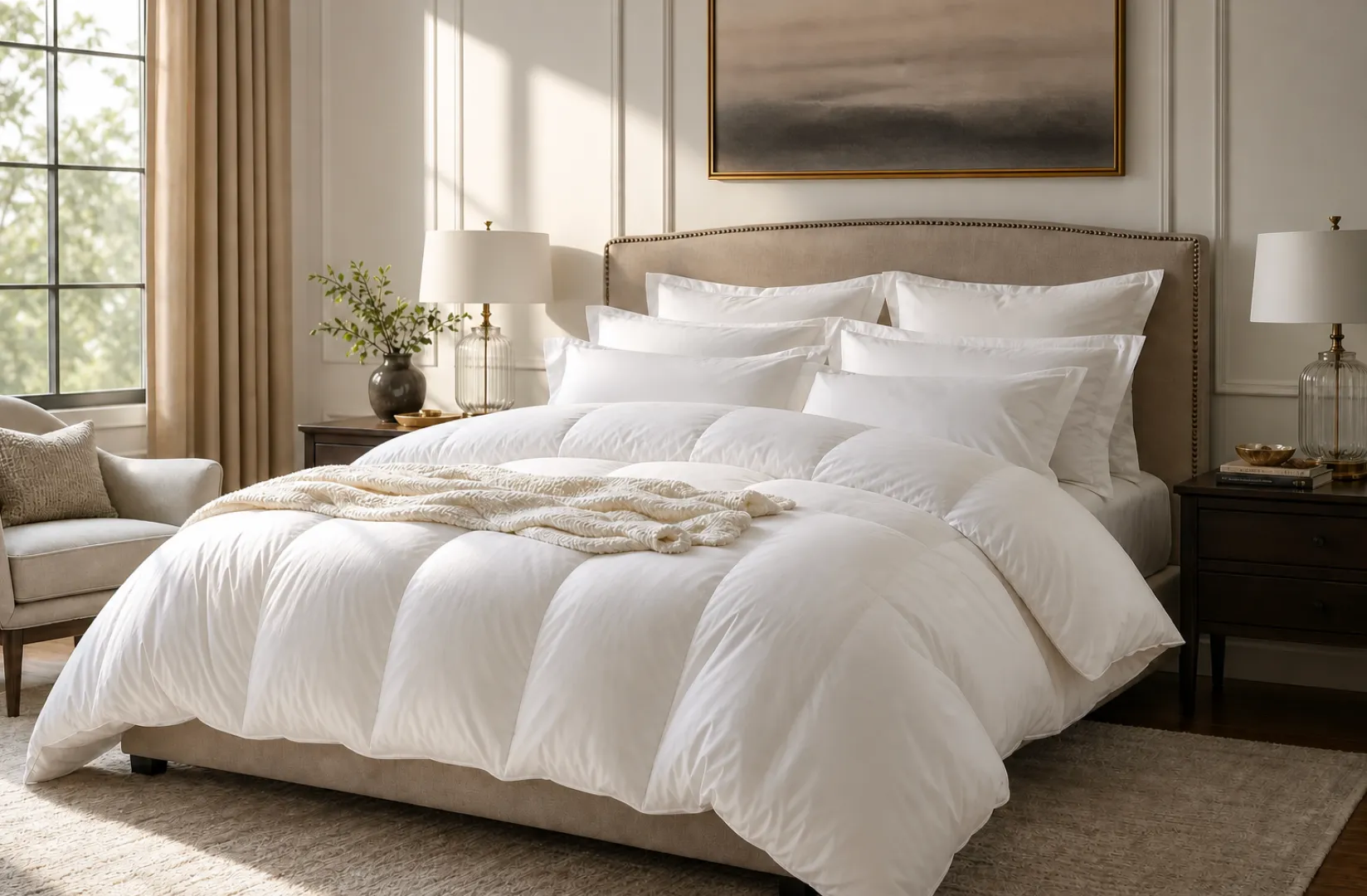
Not all down is created equal, and the gap between a genuinely premium down comforter and a mediocre one is bigger than most shoppers expect. “Premium” isn’t just a marketing word here — it refers to specific, measurable qualities: fill power, cluster size, construction, and shell fabric, all of which affect how the comforter actually performs once it’s on your bed.
Fill Power Is the Number That Actually Matters
Fill power measures how much space one ounce of down occupies — essentially, how lofty and efficient the down is. Down in the 500–600 range is a decent entry-level option, fine for occasional use or guest rooms. The 650–700 range offers solid quality and loft for most everyday sleepers. Above 750, down starts to feel noticeably lighter and loftier for the same warmth, which is where genuinely premium comforters live. A higher fill power doesn’t mean “hotter” — it means the down insulates more efficiently, so the comforter can feel lighter while still keeping you just as warm.
A comforter like the Deluxe Silk Goose Down Comforter, built around an 800 fill-power European goose down, illustrates the difference well: the loft-to-weight ratio is what makes premium down feel like it’s barely there while still doing its job through a cold night.
Why the Warmth-to-Weight Ratio Is the Real Selling Point
The defining feature of good down is that it insulates without requiring the thick, dense bulk that lower-grade fills need to achieve the same warmth. That’s why a well-made down comforter can feel airy, cocooning, and almost weightless rather than restrictive — a meaningful difference for anyone who’s ever woken up sweaty and tangled under a heavy synthetic comforter that had to compensate for weaker insulation with sheer mass.
Construction Quality You Can Actually See and Feel
Baffle-box construction — internal fabric walls that create three-dimensional chambers between the top and bottom layers — is what allows down to loft fully instead of compressing flat. Lower-cost comforters typically rely on sewn-through construction instead, which is cheaper to produce but creates cold, compressed seams exactly where the stitching runs through the fill. Over time, that difference shows: a baffle-box comforter holds its shape and warmth consistency far longer than a sewn-through one.

Shell Fabric Shapes the Whole Experience
The fill gets most of the attention in buying guides, but the shell fabric determines how the comforter actually feels against your skin night after night. A tightly woven, breathable shell holds the down securely while still allowing airflow, which prevents that stuffy, overheated feeling some down comforters get an undeserved reputation for. A relaxed, textured shell like the European Linen Goose Down Filled Comforter shows how shell choice can soften a warmer fill, giving it a more breathable, less sealed-in feel than a tighter cotton sateen weave would.
Matching Warmth Level to How You Sleep, Not the Calendar
The biggest mistake buyers make with any down comforter, premium or not, is choosing warmth based on an imagined “cold winter bed” rather than their actual sleep habits. Light warmth suits hot sleepers, warm climates, and anyone using it as a summer or year-round layer. Medium or all-season warmth is the most versatile option for most households and works well for couples with different temperature preferences. Extra warmth only makes sense for genuinely cold bedrooms or consistently cold sleepers — for a step up in that direction, something like the Organic Cotton Goose Down Comforter in its Ultra-Warm version delivers more insulation without the stiffness that lower-grade fills tend to develop at higher warmth ratings.
Common Myths Worth Retiring
More expensive doesn’t automatically mean better — price should be backed by verifiable quality markers like fill power and construction, not just brand name. A silk down comforter can offer a luxurious balance of softness, breathability, and warmth, but the quality still depends on its materials and construction. Down isn’t inherently “too hot” either; that reputation usually comes from poorly ventilated shells or excessive fill weight rather than the down itself. And down alternatives, while a reasonable choice for some households, still tend to feel heavier and less breathable than genuinely premium down over time, even when they’re marketed as feeling identical.
Is the Investment Actually Worth It?
For anyone replacing a flattened, overly heavy comforter, sensitive to bulky bedding, or simply tired of waking up too hot or too cold, premium down tends to earn its price back in comfort within the first few months of regular use. It’s also a smart choice for couples, since the lighter warmth-to-weight ratio reduces the tugging and bunching that heavier comforters tend to cause when two people share one bed.
The Bottom Line
A premium down comforter isn’t defined by price alone — it’s defined by fill power, construction quality, and shell fabric working together to deliver warmth without weight. Check those three markers before comparing price tags, and the difference between a comforter that merely looks nice and one that actually improves how you sleep becomes much easier to spot.
FAQ
What fill power counts as “premium”?
Generally 750 and above. Down in that range feels noticeably lighter and loftier for the same warmth compared to the 500–700 range, which is where most mid-quality comforters sit.
Is a higher price always a sign of better quality?
Not automatically. Price should be backed by verifiable markers — fill power, cluster size, baffle-box construction, and shell quality — rather than brand name alone. It’s worth checking those specs before assuming a higher price means a better comforter.
What’s the real difference between premium down and down alternative?
Premium down offers a better warmth-to-weight ratio, so it feels lighter and more breathable for the same insulation. Down alternatives are a reasonable choice for animal-free or easier-care bedding, but they tend to feel heavier and flatten sooner than genuinely premium down.